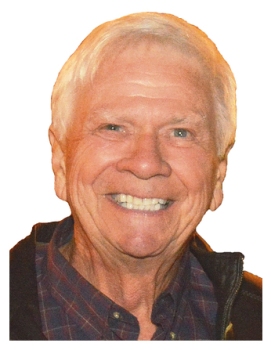
My friend, 68, will be caregiver to his mom, who is 90

On Life and Love after 50 eNewsletter – May 19, 2018

A Champ to care give his 90-year-old mother (Be sure to read the update at the end)

I have been friends with Mick for 43 years. We worked together at the Victoria Station restaurant chain in the 1970s. Those were fun and carefree days back then. My, my, how life has changed. This week, Mick, 68, reached out for advice.

Mick wrote, “In September, 2017, I retired from the Federal Deposit Insurance Corporation and then spent the winter in Lake Tahoe skiing. While I was up there, Emma, my 90-year-old mother, tripped and fell in the chicken house at her farm in rural Wisconsin and suffered a concussion.

Emma has been living alone, by proud choice, in a circa 1850 farmhouse on 47 acres for the past few years following the passing of her second husband and her dog. That accidental fall at her farm, and, one too many cold winters, finally changed her mind about living alone. She has decided to take me up on my longstanding offer for her to move to Dallas to live out her final years near me.

As I considered her and my housing options, I decided to buy a house near White Rock Lake that was big enough with the right floor plan to permit us to be housemates but still have a healthy measure of separation and privacy.

I read a book titled “Being Mortal” by Atul Gawande, which describes how we in the developed world have decided to ‘outsource’ the care of our elders to an impersonal, uncaring industry focused more on medical outcomes and safety than quality of life.

I strongly recommend Champs take the time to read the book. That book helped me decide that my mother deserved a better fate than to be parked in an institutional setting waiting to die. That may happen eventually, but until it becomes necessary, I want to provide her with a more pleasant alternative.

I am a bit apprehensive about having my mother as a housemate. She and I are fiercely independent and have each lived alone for many years. We also know how to push each other’s ‘buttons.’ But we have committed to give this a try.

Emma’s health is good. But I know at some point, the wheels will start to come off. There is enough room here to permit live-in help if or when necessary. I intend to go back to work (for the $ and the mental stimulation) and have a new, wonderful lady named Mary Ann, age 61, in my life who lives a short drive away. So, I will get time away from Emma. So, I should avoid caregiver loneliness. Mary Ann is totally on board with Emma moving in with me.


Mick and Mary Ann – Mick will help his Mom; Mary Ann agrees with his decision 

The challenges to this arrangement are obvious. But my mother and I have always gotten along very well. I’m sure we will be able to negotiate our way around the inevitable conflicts (so long as she remains lucid). My immediate concerns are:

1. Her single senior loneliness. Emma will be leaving behind her social network and initially will be totally dependent on me for conversation and emotional support. How do I help her develop a cadre of new buddies here in Dallas to ease that burden? She will need senior social interaction.

2. Her isolation. Our house is in a wonderful park like setting with shade trees and a large nearby lake. Yet Dallas-Fort Worth is the fourth largest urban area in the US. So, there is a lot to do – museums, opera, symphony, the Dallas Arboretum, restaurants, art galleries, etc. My mother has agreed to give up her car and will not be driving, but I want her to get out and enjoy all that the Dallas/Fort Worth area has to offer, as long as she is able. Are Uber and Lyft safe and reliable transportation alternatives?

3. My sadness. I think of my mother as a strong, vibrant woman with a bit of a temper and a lot of spunk. She stopped cross country skiing at age 80 and still shovels snow and chops her own firewood. She has always been a handful.

But as she ages, she is beginning to show signs of frailty and loss of cognitive skills. She is more indecisive than before. I understand that such declines may be inevitable but emotionally it’s hard for me to watch and experience. Seeing her only occasionally, as I did previously, made it easier to take. But what will happen when I see it every day? How do I best prepare myself to be strong but remain considerate and loving?

I’m certain our Champs have a lot of collective and hard-earned wisdom on how to manage my new situation. Feedback from them would be helpful. There is no reason for me to reinvent the wheel.”

Tom’s comment to Mick: 

-Your apprehension is understandable. No doubt, her moving in will be an adjustment for both of you.

-Your immediate concerns are valid. She will be lonely; you will need to find places for her where she can go and socialize and make new friends. Is there a senior center near? Check Meetup.com to see if there are clubs or activities that would interest her. I’d get on this her senior social interaction right away.

-Uber and Lyft are, for the most part, safe options. But, occasionally, we hear about a driver who is a bad egg. Also, can Emma use a cell phone to access the apts so she can order Uber or Lyft when she wants to be picked up?

Are wheel-chair-access buses for seniors available to come to your home to transport Emma to and from the places she will want to go?  Also, who will be with her at museums, the opera and other places when she is out and about?

-Good that the new house is big enough should you need live-in help.

-The sadness you feel is natural, after all, you love her. But showing signs of frailty and loss of cognitive skills is normal. To cope with that you will have to realize it goes with the territory. You will be tested most with having patience for her declining ability and if that becomes too unbearable, you may have to make other arrangements for her, which you and she do not want.

That’s what makes care giving so damn hard. It becomes lonely as well. You cannot let it start to cost you your health—that’s a huge challenge.

Knowing you, you will handle the situation with grace and understanding.

And then this happens. Update from Mick on Wednesday:

Mick wrote, “Yesterday, my mother walked into a glass partition at her bank in West Bend WI, bounced off, fell down and severely broke her leg. Fortunately, the hip ball and socket are in good shape (so no hip replacement needed) but she will have a rod and screws installed this afternoon to put her femur back together. My brother is on his way there now. I will fly to Milwaukee Friday.

“So, I guess this will be baptism-by-fire for me regarding this care-taking thing. Wish me luck!”

Overcoming senior loneliness

On Life and Love after 50 eNewsletter – April 6, 2018

The key to overcoming single senior loneliness and the blues

At the end of last week’s newsletter, I asked Champs for their opinions on senior loneliness, and what can be done to lessen it.

As I read the comments, I realized that many of the suggestions for overcoming loneliness were almost identical to tips we’ve stated before regarding how to improve one’s chances for meeting a potential mate.

Here are a few of the valuable suggestions from last week:

Thyrza, California, said, “I think loneliness happens to any age, gender or what have you in life. I was very lonely when my parents moved me with them away from my friends.

“I felt a touch of loneliness when I was a full-time, stay-at-home mom. Now at my age, a widow living alone, loneliness still creeps in. It does not bother me as much as when I was younger with my responsibilities as mom and wife.

“Loneliness affects everyone, but I learned that freedom to do what I want with my life released me from that feeling. I know it will always be part of one’s life but the freedom to act to get out of the loneliness rut is to be embraced. Embrace loneliness and know when to release the feeling. It is just a feeling anyway.”

Jackie, Tampa, Florida, emailed, “Loneliness is the biggest challenge for me as a single. I don’t mind eating out or traveling alone, but sometimes it would be nice to have a companion to share the experiences with.

“I don’t have many female friends who are financially able to travel or go out much. And I’m not a spendthrift, but I would enjoy spur-of-the moment road trips or dinner and a movie with a friend. Before I die, I would love to be in a mutually loving, supportive, and respected relationship.

Esther, Brooklyn, New York, “As a single woman, retired teacher, with no children and little family, I understand how loneliness can be a destructive force if not well addressed. To avoid loneliness, there are several things I do:

-Maintain contact with a small group of close friends with whom I share birthdays, holidays and life events

-Volunteer at the local library, museum and Botanical Garden

-Work as a private English tutor three days a week

-Interact with people of all ages with various needs. My local college offers a broad lifelong learning program with varied courses, travel opportunities and cultural events. I am an active participant

“Never miss a regularly scheduled appointment whether it be a dental, medical or beauty appointment

“Living in New York City, I am able to attend many, diverse cultural and social events. The Harbor Fitness, a state-of-the-arts gym near me, offers a fabulous ‘silver sneakers’ program for people over 55. I work out and socialize regularly.

“Through the internet, I keep in contact with old friends and relatives who live far away. Mainly, I do not feel alone. I am busy, significant and connected!”

Jon, Olympia, Washington, “The reason loneliness can be such a problem is we are ingrained with the philosophy that we must have another person in our lives to be ‘whole.’  Obviously, this is not the universal answer, citing the number of people in miserable marriages and a high divorce rate.

“Doing things in which a person finds fulfillment–not solely to be busy and taking up time–can reduce the feeling that they need an intimate relationship with another person. A few close friends can help make up the difference.”

JoAnn, “Get a dog.  Best friend, a laugh and cuddle a day!”

Jack of All Trades, “On LONELINESS as a health issue: I’m glad the surgeon general has declared loneliness as an epidemic. If all goes well, this will lead to more programs for companionship and enjoyment for older people. On the other hand, it might backfire in some way—causing problems for the lonely. Better awareness of old-age loneliness ought to be a good thing.

“(But probably nothing will alleviate the problem of adult children more interested in ‘their’ money than in their parents’ happiness.)”

Bonnie, California, wrote, “I have great compassion for those experiencing loneliness; It is debilitating.

“I have been able to mostly escape that condition because I am an only child. Without playmates under my roof during my growing-up years, I had to invent my own fun. Creativity, reading, and writing were my friends.

“Now, at 64, and a single, empty-nester mom, those are also my adult enjoyments. I work full-time as a designer and read and write at every opportunity. I also love to travel solo, because my interests are specific, and I like to be able to pace myself and my energy as I go. For that reason, I avoid travel tours.”

“However, if I was seeking companionship, I would reach out to the cultural community and volunteer as a docent. Or at an animal shelter and offer two times a week to give love to the yet-to-be adopted pets.

“Or, save for a river cruise on the Seine. Always, always have something to look forward to. Open your home to a once-a-month pot luck dinner. Drive for Meals on Wheels. (My 96-old uncle still drives and serves others!) Give time at your house of worship.

“Take a free class at a local college. Your calendar will be bursting at the seams with interesting tasks and interesting people and new ideas. And others will be blessed by your contributions.”

Tom’s comment:

There is one key that ties these pieces—overcoming loneliness, combating boredom, and improving one’s chances of meeting a potential mate–together. I wrote about the key in the final eNewsletter of 2017, which was titled, “The five things I’ve learned in three years of retirement.”

That key: seniors must have senior social interaction with people. That is the most important thing I’ve learned in retirement.


          Senior social interaction–absolutely essential for seniors

That December, 2017, newsletter included these three paragraphs: 

“If retired people let socializing with others slip away–they might be sitting around the house or watching too much mindless TV, for example–their retirement will become boring, lonely and meaningless. To be too isolated is not good for one’s health.

“A good way to interact with people is by joining groups. Meetup.com lists thousands of groups and activities and should provide plenty of ideas for people not sure what to do to meet others.

“And one last thing about senior social interaction after retirement. Try to mix social interaction with younger people into your life—kids, grand kids, great grand kids, for example, or friends younger than yourself can keep you thinking young. That’s very important.”

Years ago, a woman said to me, “I’ve been married and unhappy, and single and unhappy. Being single and unhappy is better, in that I can more readily do something about it by getting out of the house and involved in activities I enjoy. I can interact with and meet new people. Whereas, being married and unhappy, isn’t something you can change overnight. Social interaction is more difficult. Divorce takes its toll in time, stress and money.”

So, if you are feeling lonely, get out there and make social interaction a high priority.

Note from Tom Blake

Similar articles to the one above by Tom Blake appeared in these three newspapers

DPTIMES_LOGO-copy1

Dana Point Times Newspaper April 13, 2018

aeb8d6_d1217dc996dc4392a46d4bcabc21eb2f_mv2

San Clemente Times Newspaper April 12, 2018

DISPATCH

The Capistrano Dispatch Newspaper April 13, 2018